
Manufacturing Insurance in Staten Island, New York
Licensed To Serve All New York | 20+ Years Manufacturing Expertise | Certified Specialists
Our A-Rated Insurance Carriers Specializing in Manufacturing



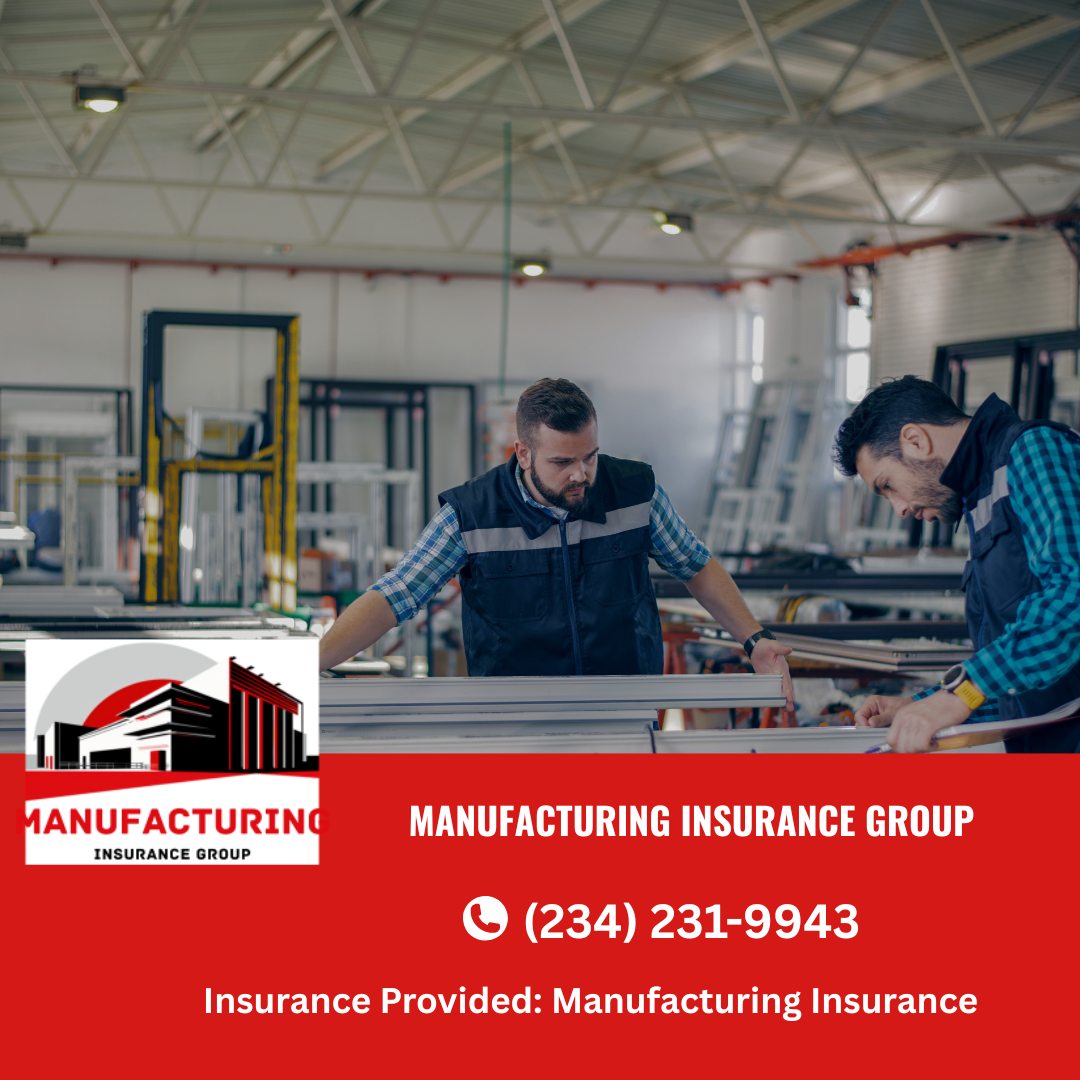
Manufacturing insurance in New York protects your factory, your employees, and your revenue from the costly risks that threaten production every day.
As an independent agency serving Staten Island manufacturers, we quote 20+ carriers to find the right coverage at the right price.
Every manufacturer in Staten Island operates under pressure. Raw materials move through your facility, machinery runs at capacity, employees work production lines, and finished goods ship to customers who expect quality. A single workplace injury, a defective product reaching a consumer, or an equipment failure that halts your line can create financial consequences that extend far beyond the incident itself.
New York makes these stakes even higher. The state enforces strict liability for product defects under UCL §350 and common law, meaning your Staten Island factory can face litigation without the claimant proving negligence. Median jury awards for manufacturing defect cases reach approximately $3.9M.
Workers’ compensation is mandatory for every employer with one or more employees under Workers’ Compensation Law §§1-160, and high-risk manufacturing classes face elevated premium rates of 2.5% to 5% of payroll.
The Scaffold Law under Labor Law §240 imposes absolute liability on property owners for gravity-related injuries during construction or renovation, driving general liability and excess insurance costs 200% to 500% higher than other states.
Without tailored coverage, a single claim can drain operating capital, halt production, and put your Staten Island business at risk of closure.
We exist to prevent that outcome. Manufacturing Insurance Group partners with Staten Island business owners to bundle workers’ compensation, product liability, general liability, equipment breakdown, business interruption, and pollution liability coverage from carriers like Travelers and Chubb into a comprehensive insurance program built specifically for your operation.
We offer customized insurance quotes that are designed to help you understand your insurance needs and tailor solutions that align with your business objectives.
Pollution Liability, Cyber Protection, and Equipment Breakdown Coverage for Staten Island Manufacturers
Staten Island manufacturers face a combination of operational, legal, and environmental exposures that demand specific coverages.
A generic commercial policy leaves gaps. Here is what a properly structured manufacturing insurance program includes and why each coverage matters to your bottom line.
Workers’ compensation insurance is mandatory in New York for every employer with one or more employees, including part-time and family members. This coverage pays for medical treatment, wage replacement at 66.67% of average weekly wages, disability benefits, and death benefits when a work-related injury or illness occurs.
Manufacturing-specific classification codes for machinery, chemical processing, and metal fabrication carry elevated rates ranging from 2.5% to 7% of payroll. Proof of coverage must be displayed on-site at your Staten Island facility.
Violations trigger fines and stop-work orders from the Workers’ Compensation Board. Coverage is available through the New York State Insurance Fund (NYSIF), private carriers, or self-insurance for qualifying firms. Injuries must be reported within 30 days to avoid claim denial.
Product liability insurance protects your Staten Island factory against claims arising from design flaws, manufacturing defects, and failure-to-warn allegations. New York follows a strict liability doctrine, which means a claimant does not need to prove your negligence.
If your product reaches a consumer in an unaltered condition and causes injury, your business bears responsibility. Defenses are limited, and the financial exposure is significant. This coverage is not state-mandated, but it is essential for any Staten Island manufacturer producing electronics, food products, fabricated metals, machinery components, or chemical goods.
General liability insurance covers third-party bodily injury and property damage at your premises, including products-completed operations claims. Labor Law §200 requires every New York employer to maintain a safe workplace free of recognized hazards. Sections §240 and §241(6) intensify your exposure when your factory undergoes construction, renovation, or significant maintenance. This coverage responds to slip-and-fall incidents, visitor injuries, and property damage claims that occur on or because of your Staten Island manufacturing site.
Equipment breakdown insurance covers the financial loss when critical machinery fails. This includes consequential production loss, spoilage of materials, and the cost of repair or replacement. Staten Island manufacturers relying on CNC machines, boilers, compressors, refrigeration units, or automated production lines face immediate revenue loss when a mechanical or electrical failure stops output. This coverage fills a gap that standard commercial property policies exclude.
Business interruption insurance replaces lost income when a covered peril halts your Staten Island production. Fire, equipment failure, supply chain disruption, or a natural disaster can shut down your operation for days or weeks. This coverage ties directly to your gross earnings and keeps payroll funded, fixed costs covered, and your business solvent during the recovery period.
Pollution legal liability covers gradual and sudden chemical releases, cleanup costs, and third-party bodily injury or property damage claims resulting from pollutants at your Staten Island site. Manufacturers handling chemicals, solvents, metals, or industrial waste face environmental exposure that standard general liability policies exclude.
Urban density in many New York manufacturing corridors amplifies this risk, and landlords or host facilities may contractually require this coverage.
Cyber and industrial control systems (ICS) insurance protects against ransomware attacks, production system intrusions, and data breaches targeting the operational technology that runs your automated Staten Island plant. DFS Regulation Part 500 increasingly applies to manufacturers with connected systems. A single cyberattack on your ICS can halt production, corrupt quality controls, and expose sensitive operational data.
Inland marine insurance covers raw materials, finished goods in transit, and specialized tools moving through your supply chain to and from Staten Island. Standard property policies do not cover goods once they leave your facility, creating a gap that this coverage closes.
Commercial property insurance provides all-risk protection for your factory building, inventory, raw materials, and installed machinery against fire, theft, vandalism, and natural disasters. This is the foundation of your manufacturing insurance program.
Excess and umbrella insurance extends the limits above your primary general liability, product liability, and auto policies. Staten Island manufacturers with high-value contracts, significant payroll, or complex supply chains need limits that match their actual exposure, not minimum thresholds.
Commercial auto insurance covers fleet vehicles your operation uses for delivery and distribution, with specific attention to New York’s no-fault requirements and the liability exposures tied to moving finished goods through congested corridors.
How the Scaffold Law and New York's Strict Product Liability Rules Drive Factory Insurance Costs in the Five Boroughs
New York’s regulatory environment creates compliance obligations and cost pressures that directly shape how you structure your manufacturing insurance program. Understanding these laws is not optional. It is a financial necessity.
Workers' Compensation Compliance
Under Workers’ Compensation Law §§1-160 requires every Staten Island employer with one or more employees to carry coverage. This includes full-time, part-time, and family members working in your operation. Benefits cover medical treatment, lost wages, rehabilitation, and death benefits.
You must display proof of coverage on-site. Non-compliance exposes your factory to fines, stop-work orders from the Workers’ Compensation Board, and personal liability for the business owner. Coverage must be obtained through NYSIF, a private carrier, or an approved self-insurance program.
The Scaffold Law
Under Labor Law §240 creates absolute liability for property owners and general contractors when gravity-related injuries occur during construction, renovation, or significant maintenance at your Staten Island facility.
This law eliminates comparative negligence as a defense. If a worker falls from scaffolding, a ladder, or an elevated platform at your factory, you bear full liability regardless of the worker’s own conduct. This single statute drives general liability and excess insurance premiums 200% to 500% higher than comparable coverage in other states.
Every Staten Island manufacturer planning a facility expansion, equipment installation requiring elevated work, or building renovation must account for this cost in their insurance program and construction budget.
Product Liability Under Strict Liability
This means that under New York common law and UCL §350, your factory is responsible for products that cause injury due to design defects, manufacturing errors, or inadequate warnings.
The claimant does not need to prove you were negligent. Defenses are limited to product misuse or alteration after leaving your control. Median awards for manufacturing defect cases reach approximately $3.9M, making robust product liability limits a financial imperative for Staten Island producers.
DFS Oversight
Through the New York State Department of Financial Services shapes every insurance transaction affecting your Staten Island operation.
DFS enforces regulations under 11 NYCRR, including broker licensing (Part 21), independent adjuster standards (Part 26), excess lines placement (Part 27), managing general agent requirements (Part 33), and producer transparency (Part 30).
Certificates of Insurance are required for compliance verification across contracts and lease agreements.
Cyber regulations under Part 500 apply to manufacturers with connected industrial control systems and smart factory infrastructure.
The Warehouse Worker Protection Act
Effective June 2025, requires factories and warehouses with 100 or more employees per site or 1,000 or more statewide to implement injury reduction programs, disclose production quotas, and conduct safety training. Non-compliance increases your workers’ compensation premiums and exposes your Staten Island operation to penalties.
This act integrates with OSHA federal standards enforced at the state level and strengthens the case for proactive risk management within your insurance program.
We handle compliance with every DFS, NYSIF, OSHA, and Workers’ Compensation Board requirement on your behalf. You focus on production. We focus on protection.
An independent insurance agency serves Staten Island manufacturers differently than a captive agent or a direct carrier. The distinction matters because it directly affects your coverage quality, your premium cost, and your ability to manage risk effectively in a high-cost state.
A captive agent represents one carrier. A direct writer sells its own products. Either option limits you to a single company’s rates, terms, and appetite for manufacturing risk. In New York, where workers’ compensation rates are among the highest in the nation, where the Scaffold Law inflates liability costs, and where strict product liability creates significant exposure, being locked into one carrier’s pricing puts your Staten Island factory at a competitive disadvantage.
We access 20+ carriers, including Travelers, Chubb, and specialized manufacturing insurers.
This means we compare workers’ compensation rates across NYSIF and private markets, match your product liability exposure to a carrier with appetite for your specific manufacturing class, and bundle your general liability, equipment breakdown, business interruption, and pollution liability into a cohesive program where coverages do not overlap and gaps do not exist.
For the CFO managing budget allocation, we focus on Total Cost of Risk, not just premium. That means loss control services that reduce claim frequency, claims advocacy that controls severity, and risk management strategies that lower your Experience Modification Rate over time.
For the operations manager balancing compliance with production schedules, we handle your Certificates of Insurance, NYSIF filings, DFS documentation, and OSHA-related coverage requirements so your team stays on the floor instead of buried in paperwork. For the business owner who built this company and wants affordable protection without sacrificing coverage quality, we make the process direct. Request a quote, and we deliver options from multiple carriers within days.
This is what it means to work with an independent agency that serves Staten Island manufacturers.
We are not selling you a policy. We are building an insurance program engineered for your specific risks, your specific industry, and your specific facility.
The Manufacturing Landscape in Staten Island, New York
We serve Staten Island manufacturers because we understand the specific industries, workforce dynamics, risk exposures, and economic forces that shape your insurance needs. Here is what drives the manufacturing economy in Staten Island and how it affects the coverage your operation requires.
Manufacturing Presence and Economic Concentration in Staten Island
The North and West Shore of Staten Island had a high concentration of industrial employment in 2014, with 98 percent and 93 percent respectively. While Staten Island generally has a lower concentration of manufacturing jobs compared to other boroughs, the West Shore is emerging as an industrial hub, supporting over 50 active industrial and manufacturing businesses employing over 500 workers. Recent developments include a one-million-square-foot Amazon fulfillment center and a large IKEA facility, indicating a shift towards logistics and warehousing within the industrial sector.
Primary Manufacturing Sectors in Staten Island
Key manufacturing sectors include Specialty Trade Contractors, Grocery Wholesale, Food Manufacturing, Machinery Manufacturing, and Custom Rubber Products. The industrial growth also encompasses construction, transportation, food distribution, and waste management services.
Workforce Size, Availability, and Average Manufacturing Wages
In 2021, Staten Island’s manufacturing employment was reported as 300. The Staten Island West Shore currently supports over 500 workers in industrial and manufacturing businesses. Training programs like Certified Manufacturing Associate and Manufacturing Fundamentals are available to develop a skilled workforce.
The average annual pay for an Entry Level Manufacturing Engineer in Staten Island is 70,600 per year. A Production Specialist’s hourly pay is approximately 18.97, and a Warehouse Worker’s average salary is 48915 per year.
Key Manufacturing Employers and Facilities in Staten Island
Major manufacturing and industrial employers include adidas, American Greetings, Kellanova, Newell Brands, HILAND DAIRY, Praxair, Avon, Tarter Farm and Ranch, Johnson Controls, Pratt Industries, Seabreeze, Park Plus, and Coi Rubber Products.
Recent Economic Development and Growth Trends
By 2022, the area’s financial activities, manufacturing, and retail trade sector jobs were at 2019 levels or greater, indicating a recovery or stability in manufacturing jobs. The Staten Island West Shore is being promoted as NYC’s new industrial hub, driven by incentives, access to ports, and modern infrastructure, with plans for additional warehousing and vehicle storage.
Local Risk Factors Facing Staten Island Manufacturers
Environmental concerns exist due to historical industrial activities and the former Fresh Kills Landfill. Heavy pollution from diesel trucks is a concern. The area is susceptible to flooding, exacerbated by rising sea levels and increasing storm intensity. Supply chain risks are a general concern for NYC businesses.
Business Support and Manufacturing Resources in Staten Island
The Staten Island Economic Development Corporation (SIEDC) and Staten Island Industrial Alliance (SIIA) are key organizations supporting industrial and sustainable development. SIEDC also serves as NYC’s designated provider of assistance to industrial businesses on Staten Island, offering financing assistance.
What Makes Manufacturing in Staten Island Unique
The Staten Island West Shore’s emergence as a new industrial hub, with significant investments in logistics and warehousing, presents a non-obvious insight. This focus on modern industrial infrastructure and logistics could create new opportunities and challenges for insurance, particularly in areas like property, cargo, and liability for large-scale distribution centers.
Scaffold Law and Construction Risk Profile for Staten Island Facilities
New York Labor Law 240/241, known as the Scaffold Law, imposes absolute liability on property owners and contractors for elevation-related injuries to workers. This significantly increases insurance costs for construction and renovation projects across New York State. Manufacturers undertaking construction or renovation of their facilities in Staten Island would face these elevated insurance premiums, particularly for general liability and workers’ compensation.
Workers' Compensation Costs and Cost of Business in Staten Island
New York State’s workers’ compensation assessment rate decreased to 7.1 percent of the standard premium in 2025, down from 9.2 percent in 2024. The maximum weekly benefit is 1,171.46 as of July 1, 2024. Electricity in Staten Island costs 31 cents per kilowatt-hour, approximately 56 percent higher than the national average. Property taxes also contribute to energy bills, with up to 30 percent of energy bills consisting of property taxes in NYC.
Legacy and High-Tech Industry Insurance Considerations
Staten Island’s manufacturing landscape features a mix of traditional sectors like food manufacturing and specialty trade contractors, alongside a push towards modern industrial infrastructure and logistics. The NYCEDC highlights a focus on advanced manufacturing and 3D printing. This blend creates insurance implications that balance risks from older infrastructure in legacy industries with emerging risks in high-tech manufacturing, such as cyber liability and specialized equipment coverage.
Common Questions Staten Island Manufacturers Ask About Insurance
What insurance is mandatory for manufacturers in Staten Island, New York?
Workers’ compensation is mandatory for every New York employer with one or more employees under Workers’ Compensation Law §§1-160. Coverage can be obtained through NYSIF, a private carrier, or self-insurance for qualifying firms. Proof must be displayed on-site at your Staten Island facility. While general liability, product liability, and property insurance are not state-mandated, contracts, landlords, lenders, and customers almost universally require them. Operating without these coverages exposes your factory to claims that can exceed your available capital.
How much does workers’ compensation cost for a Staten Island manufacturing business?
Workers’ compensation rates for Staten Island manufacturers range from 2% to 7% of payroll depending on your classification code and claims history. High-risk classes like machine shops, chemical processing, and metal stamping pay elevated premiums. Your Experience Modification Rate directly affects your final cost. An independent agency compares NYSIF rates against private carrier options and identifies available discounts for manufacturing companies, safety programs, and claims-free periods to reduce your total premium.
How does the Scaffold Law affect my factory’s insurance costs?
Labor Law §240 imposes absolute liability on property owners for gravity-related injuries during construction or renovation at your facility, driving liability premiums 200% to 500% higher than other states. This means if your Staten Island factory undertakes a building expansion, equipment installation involving elevated work, or facility renovation, your general liability and excess insurance costs increase substantially. We structure your program to account for Scaffold Law exposure before your project begins, not after a claim occurs.
What is product liability insurance and why do Staten Island manufacturers need it?
Product liability insurance protects your business against claims from defective products that cause bodily injury or property damage. New York enforces strict liability under UCL §350 and common law, meaning your Staten Island factory can be held responsible without the claimant proving negligence. Design flaws, manufacturing defects, and failure-to-warn allegations all fall under this exposure. With median awards reaching approximately $3.9M, adequate product liability limits are a financial requirement for any manufacturer.
Can I bundle my manufacturing insurance policies for savings?
Yes, and bundling through an independent agency is one of the most effective ways to reduce your Total Cost of Risk. We combine workers’ compensation, general liability, product liability, equipment breakdown, business interruption, pollution liability, and other coverages into a coordinated program across multiple carriers. Bundling eliminates coverage overlaps, closes gaps between policies, and often qualifies your Staten Island factory for multi-policy discounts that a single-carrier approach cannot match.
What role does the Department of Financial Services play in my manufacturing insurance?
DFS oversees all insurance licensing, compliance, and regulatory enforcement for manufacturers operating in New York under 11 NYCRR. This includes broker licensing, Certificates of Insurance requirements, excess lines placement rules, and cyber regulations under Part 500 that apply to manufacturers with connected industrial control systems. We ensure every policy in your program meets DFS standards and that your Staten Island factory maintains full compliance.
New York manufacturing compliance navigator
Five regulatory obligations affect your Staten Island factory's insurance costs and legal exposure. Expand each item to review the details, then check it off to track your compliance status.
Protect Your Staten Island Manufacturing Business — Get Your Free Quote Today
Your Staten Island factory represents years of investment, innovation, and hard work. Every assembly line, every piece of equipment, and every product you ship carries risk that demands precision in coverage, not guesswork.
Manufacturing Insurance Group serves Staten Island manufacturers with the expertise to navigate the Scaffold Law, secure competitive workers’ compensation rates across NYSIF and private markets, protect against strict product liability exposure, and bundle your coverages across 20+ carriers.
We deliver tailored manufacturing insurance designed specifically to protect your business against the unique industry risks you face in New York.
We do not sell generic policies. We build insurance programs engineered for manufacturers.
Get Your Free Quote Today
Tell us about your Staten Island operation and we will deliver competitive options from multiple carriers.
Contact Us for Personalized Coverage Options
Call (234) 231-9943 to speak directly with a manufacturing insurance specialist who understands your industry and your risks.
Local Zip Codes We Serve
10301 / 10302 / 10303 / 10304 / 10305 / 10306 / 10307 / 10308 / 10309 / 10310 / 10311 / 10312 / 10313 / 10314