
Manufacturing Insurance in Taylor, Michigan - Tailored Coverage That Protects Your Factory, Workers, and Bottom Line
Licensed To Serve All Michigan | 20+ Years Manufacturing Expertise | Certified Specialists
Our A-Rated Insurance Carriers Specializing in Manufacturing




Why Downriver Manufacturers Need Insurance Programs Built for Metal Fabrication, Stamping, and Industrial Production
Manufacturing insurance in Michigan is a customized package of commercial property, general liability, workers’ compensation, and product liability coverage designed to protect Taylor factory owners from the financial devastation of workplace injuries, equipment breakdowns, product defect claims, and production downtime.
Operating a manufacturing facility in Taylor, Michigan means managing risks that generic business insurance was never built to handle.
A single product defect claim from a distributor or OEM customer can generate six-figure legal costs before a case even reaches trial.
One machinery failure on your production line can halt output for days, bleeding revenue with every hour of downtime.
A workplace injury that triggers an MIOSHA investigation can spike your workers’ compensation premiums for years.
Michigan law adds another layer of urgency.
The Workers’ Disability Compensation Act requires most employers with three or more workers to carry workers’ compensation insurance. Penalties for non-compliance reach 1,000 dollars per day and can include criminal prosecution.
Beyond statutory mandates, lenders require commercial property coverage as a loan condition, and OEM purchase orders demand proof of product liability limits before they will issue a contract.
We serve Taylor manufacturers as an independent insurance agency with over 20 years of experience in the manufacturing sector.
We are not captive to a single carrier. We shop your risk across multiple A-rated insurers to build a manufacturing insurance program that fits your operation, your budget, and the specific exposures you face in Taylor, Michigan.
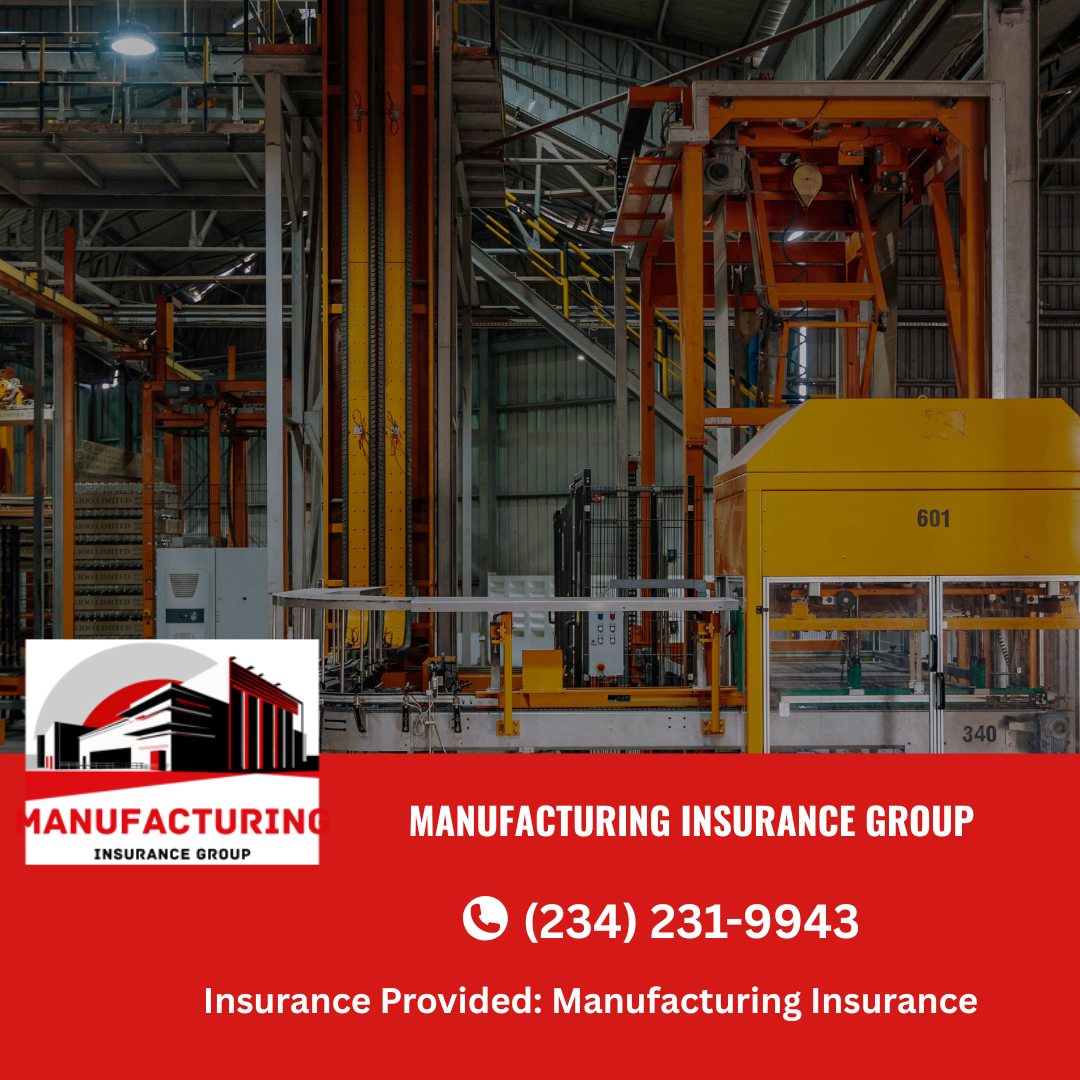
Essential Coverages for Industrial Operations — Fire Risk Protection, Equipment Breakdown, and Workers' Compensation
Every manufacturing facility carries a unique combination of exposures based on its operation type, equipment, workforce size, and the products it produces. We design coverage programs that address each of these exposures directly, eliminating the gaps that leave Taylor manufacturers financially vulnerable.
General Liability Insurance for Manufacturers
General liability protects your Taylor facility against third-party bodily injury and property damage claims. A vendor slips on a wet factory floor during a delivery. A visitor is struck by a forklift in your warehouse. A fire at your plant damages a neighboring property. General liability responds to these events and covers your legal defense costs, medical payments, and settlement obligations.
Commercial Property Insurance for Manufacturing Facilities
Commercial property coverage protects your building, production machinery, raw materials, finished goods inventory, and business income against fire, severe weather, vandalism, and equipment damage. Michigan does not mandate commercial property insurance by statute, but your lender almost certainly requires full-replacement-value building coverage, and your commercial lease likely requires you to insure tenant improvements and equipment. For equipment-intensive operations in Taylor, this coverage is not optional, it is the foundation of your financial protection.
Workers' Compensation Insurance for Michigan Manufacturers
Workers’ compensation is mandatory under the Michigan Workers’ Disability Compensation Act for private employers regularly employing three or more people, or any employer with one or more employees working 35 or more hours per week for 13 or more weeks. This coverage pays medical expenses, lost wages, and rehabilitation costs for workers injured on the job. Premiums are calculated based on your payroll, job-class codes such as machine operator, welder, or assembler, and your Experience Modification Rate. A strong safety record and proactive loss-control program directly reduce what you pay.
Product Liability Insurance for Manufacturers
Product liability coverage shields your business when a product you manufacture causes injury or property damage after it leaves your facility. Michigan law holds manufacturers liable for defective design, defective manufacturing, and failure to warn about foreseeable risks. If you sell finished goods to distributors, retailers, or OEMs, your contracts almost certainly require Certificates of Insurance proving adequate product liability limits. Without this coverage, a single recall or defect claim can threaten the survival of your Taylor operation.
Equipment Breakdown and Machinery Breakdown Insurance
Equipment breakdown coverage responds when production machinery, boilers, HVAC systems, electrical panels, or computerized controls fail suddenly due to mechanical or electrical malfunction. Standard commercial property policies typically exclude these losses. For manufacturers in Taylor running high-value production lines, a single breakdown event can trigger days of downtime, spoiled inventory, and missed delivery deadlines that cascade through your supply chain.
Additional Coverages Michigan Manufacturers Should Consider
Manufacturing operations often carry exposures that fall outside standard policy forms. We evaluate every Taylor client for the following coverages based on their specific risk profile.
Cyber liability insurance protects digitally connected plants against ransomware attacks, data breaches, and production system intrusions.
Environmental and pollution liability insurance addresses legacy industrial contamination, accidental chemical releases, and regulatory cleanup costs.
Umbrella and excess liability insurance extends your limits above primary general liability, auto liability, and employers liability policies.
Inland marine and tool floater insurance protects tools, dies, molds, and specialized equipment in transit or stored at third-party locations.
Business interruption insurance replaces lost income and covers continuing expenses during covered production shutdowns.
How We Help Manufacturers in High-Risk Production Environments Secure Better Coverage at Competitive Premiums
We built our process around one principle: Michigan manufacturers deserve an insurance partner who understands their operations as well as they do.
Here is exactly how we work with Taylor factory owners from first contact through claims resolution.
Step 1 — We Assess Your Manufacturing Risk Profile
We start by reviewing your facility type, whether that is light industrial, heavy manufacturing and assembly, food processing, metal fabrication, plastics and injection molding, chemical processing, or electronics assembly.
We evaluate your square footage, payroll, production volume, equipment values, raw materials, finished goods inventory, and loss history. This assessment gives us a complete picture of your exposure before we approach a single carrier.
Step 2 — We Compare Quotes From Multiple A-Rated Carriers
As an independent agency, we access national carriers, regional insurers across the Great Lakes states, and specialty markets for complex manufacturing risks.
We are not locked into one company. We compare coverage terms, pricing, deductible options, and carrier financial strength ratings to find the right fit for your Taylor operation. You see the options. You make the decision.
Step 3 — We Design a Custom Manufacturing Insurance Program
We assemble a tailored policy package that eliminates coverage gaps. Your program addresses general liability, commercial property, workers’ compensation, product liability, equipment breakdown, and any specialized exposures unique to your manufacturing process.
Every policy is structured to meet Michigan regulatory requirements and satisfy the contractual insurance obligations your customers, lenders, and landlords demand.
Step 4 — We Advocate for You at Claims Time
When a product defect claim, workplace injury, or equipment breakdown event disrupts your Taylor facility, our team manages your claim from first notice through final resolution.
We deploy adjusters with manufacturing industry expertise who understand the urgency of getting your production line back online.
Speed, fairness, and technical competence at claims time is where an insurance agency proves its value, and it is where we differentiate ourselves for Michigan manufacturers.
Manufacturing insurance decisions in Taylor are shaped by specific Michigan statutes, regulatory agencies, and compliance standards.
Understanding these requirements protects you from penalties and gives you leverage to reduce your premiums through proactive risk management.
Michigan Workers’ Disability Compensation Act
The WDCA is the most clearly mandated insurance requirement for Taylor manufacturers. It applies to private employers regularly employing three or more people at one time, and to any employer with one or more employees working 35 or more hours per week for 13 or more weeks within the prior 52 weeks.
Employers must prove they can pay benefits to injured workers, typically through a workers’ compensation policy or approved self-insurance. Non-compliance carries fines up to 1,000 dollars per day and potential imprisonment.
MIOSHA Safety Standards and Their Impact on Your Premiums
The Michigan Occupational Safety and Health Administration sets workplace safety standards for every manufacturer in the state. MIOSHA requires documented hazard assessments, proper employee training, personal protective equipment programs, and detailed recordkeeping and reporting of serious injuries.
Carriers use your MIOSHA compliance history and incident records as direct underwriting factors. A poor safety record drives higher workers’ compensation and general liability premiums. A documented safety program with regular audits and training records can reduce your costs measurably.
DIFS Oversight and Your Manufacturing Insurance Policy
Every manufacturing insurance policy sold in Michigan must be issued by a carrier licensed and regulated under the Michigan Insurance Code, Act 218 of 1956. The Michigan Department of Insurance and Financial Services oversees policy forms, rate filings, claims handling practices, and consumer protections.
Working with a licensed independent agency ensures your coverage meets these state standards and that your carrier has the financial strength to pay claims when they arise.
Product Liability and Contractual Coverage Requirements
Michigan common law holds manufacturers liable for defective design, defective manufacturing, and failure to warn consumers about foreseeable risks. Beyond statutory exposure, your contracts with distributors, retailers, and OEM customers almost always require proof of adequate liability and product liability insurance through Certificates of Insurance.
Purchase orders, supply agreements, and facility leases routinely specify minimum coverage limits. Operating without these limits in place puts your Taylor contracts and your revenue at risk.
Taylor's Downriver Industrial Heritage and Metal Manufacturing Concentration — Risk Profiles That Demand Specialized Coverage
Every city in Michigan has a unique manufacturing footprint, and Taylor is no exception. The data below shapes the insurance landscape for manufacturers operating in your community and directly influences how we structure coverage for Taylor factory owners.
Manufacturing Presence and Economic Impact in Taylor
Manufacturing is a significant component of Taylor’s economy. Approximately 4,992 people are employed in the manufacturing sector in Taylor, making it one of the largest employment sectors in the city [DataUSA]. The City of Taylor’s demographics indicate that manufacturing represents about 25% of the local economy [City of Taylor Demographics]. Overall, Taylor has a total of 1,973 businesses, with manufacturing being a leading industry alongside professional, scientific, and technical services, and retail [Zoomprospector].
Primary Manufacturing Sectors Driving Taylor's Economy
The primary manufacturing sectors in Taylor include automotive components and support, general industrial manufacturing, and food production. Key players in the automotive sector are companies like Watson Engineering and Windsor Machine Group, which provide engineering and manufacturing support to the automotive industry. General industrial manufacturing encompasses diverse operations, including steel processing by Worthington Industries and industrial technologies by Matthews International. Food production is also a notable sector, with companies such as American Sugar Refining, Inc. and Champion Foods contributing to the local economy [Indeed] [City of Taylor Major Employers].
Key Manufacturing Employers and Facilities in Taylor
Watson Engineering, Windsor Machine Group, Worthington Industries, Ford Motor Company, Specialty Engine Components
Workforce Size, Availability, and Wage Data in Taylor
In 2024, Taylor, Michigan, employed 4,992 people in the manufacturing sector, making it the city’s largest industry. The local labor market, like the broader Michigan manufacturing sector, faces a skilled labor shortage, with many manufacturing jobs remaining unfilled. Workforce development programs such as those offered by the Michigan Workforce Development Institute and the Advance Michigan Center for Apprenticeship Innovation are available to address these needs. Major manufacturing employers in Taylor include Windsor Machine Group, Worthington Industries, UniFirst Taylor, and Ford Motor Company. The ongoing electric vehicle transition in Michigan is contributing to a decline in automotive employment, which may impact Taylor’s manufacturing workforce.
The average annual salary for a production worker in Taylor, Michigan, is approximately 46,337 dollars per year, or 22 dollars per hour. This figure is slightly lower than the national average for production workers. For manufacturing engineers, the average pay is around 76,324 dollars annually, while a supervisor in manufacturing engineering can earn approximately 137,393 dollars per year [Glassdoor] [Indeed] [SalaryExpert].
EV Transition and Automotive Technology Risk in Taylor
Taylor, being part of the broader Detroit metropolitan area, is significantly exposed to the automotive industry’s transition to electric vehicles. The presence of automotive suppliers like Watson Engineering and Windsor Machine Group indicates a concentration of internal combustion engine (ICE) component manufacturing, which faces stranded asset risks as EV production increases [City of Taylor Major Employers]. While Michigan has seen substantial EV investments, including battery manufacturing campuses in Wayne County, the shift away from ICE production poses business continuity challenges for local suppliers heavily reliant on traditional automotive contracts [Michigan Business]. The volatility of the EV transition is evident in the cancellation of over half of Michigan’s announced manufacturing projects since 2019, and a 3% year-over-year decline in automotive employment by December 2025, highlighting the need for adaptation and diversification within Taylor’s manufacturing base [Michigan Independent].
Environmental and Legacy Industrial Risk in Taylor
Taylor faces environmental risks stemming from its industrial past, including legacy contamination from former landfill sites. A notable example is the 74-acre site at 6775 Inkster Road, historically known as the Beverly Road Dump, which contains PCBs, methane, metals, organic compounds, and PFAS compounds [Michigan EGLE]. Air quality in Taylor can be a concern, with some days experiencing poor air quality due to industrial and transportation emissions [AccuWeather]. Groundwater and soil contamination from historical manufacturing operations are also potential liabilities, requiring ongoing remediation efforts and compliance with Michigan’s evolving polluter liability laws [Michigan EGLE].
Recent Economic Development and Growth
Taylor has seen recent industrial development, including a 40 million dollar investment by Metro 94 Commerce Center to redevelop a 70-acre former landfill into a Class A industrial facility, which is expected to create 185 full-time equivalent jobs [Crain’s Detroit Business] [Michigan EGLE]. CoreOne Industrial also acquired a property at 5955 Pardee Road in Taylor, indicating continued interest in industrial real estate [CoreOne Industrial]. Additionally, there are ongoing efforts to upgrade infrastructure, such as the Eureka Road corridor, to support further economic growth and attract businesses [City of Taylor Facebook].
Local Risk Factors Affecting Taylor Manufacturers
Key local risks in Taylor include environmental liabilities from historical industrial activities, such as the former Beverly Road Dump site, which requires significant brownfield redevelopment efforts [Michigan EGLE]. The city’s reliance on the automotive manufacturing sector makes it vulnerable to industry shifts, including the ongoing EV transition and potential job losses or business disruptions for ICE component suppliers [Michigan Independent]. Additionally, like many communities in Southeast Michigan, Taylor faces challenges related to an aging manufacturing workforce and the need for continuous skills development to meet evolving industry demands [WIN Intelligence].
Business Support and Manufacturing Resources in Taylor
Taylor benefits from regional and state-level business support organizations such as the Michigan Economic Development Corporation (MEDC), which offers resources, grants, and training for businesses. The city’s Economic Development Department actively works to attract and retain employment opportunities through collaboration and innovation [City of Taylor Economic Development]. Additionally, regional workforce development programs, including those focused on EV skills transition, are available through organizations like WIN Intelligence and community colleges in Southeast Michigan [WIN Intelligence] [WCCCD].
What Makes Taylor Unique for Manufacturing Insurance
Taylor’s unique local factor lies in its significant concentration of automotive component suppliers, such as Watson Engineering and Windsor Machine Group, coupled with the city’s proactive brownfield redevelopment initiatives. This creates a complex insurance need where the business continuity risks associated with the rapid EV transition for ICE-dependent suppliers are compounded by potential legacy environmental liabilities from historical industrial sites. Insurers must offer specialized policies that not only address the financial implications of retooling or re-skilling for EV production but also provide robust environmental liability coverage for sites undergoing redevelopment, where new construction could disturb previously contained contaminants and trigger unforeseen claims related to both past pollution and future operational changes.
We offer customized insurance quotes that are designed to help you understand your insurance needs and tailor solutions that align with your business objectives.
Questions Manufacturers Ask About Fire Suppression Discounts, High-Risk Classification Premiums, and Equipment Valuation Methods
How Much Does Manufacturing Insurance Cost for a Factory in Taylor, Michigan?
Manufacturing insurance premiums in Taylor are calculated based on your payroll, property value, square footage, production volume, equipment values, claims history, and Experience Modification Rate.
Every manufacturer’s risk profile is different. A food processing operation faces different exposures than a metal fabrication shop or a plastics injection molding facility.
We provide a free, no-obligation quote customized to your specific Taylor operation so you see exactly what your coverage costs before you commit to anything.
What Coverage Gaps Do Michigan Manufacturers Commonly Overlook?
The most commonly overlooked gaps include equipment breakdown coverage, cyber liability for digitally connected production systems, environmental and pollution liability, and product liability limits that fail to meet OEM contractual requirements.
Many Taylor manufacturers carry general liability and workers’ compensation but leave critical exposures uncovered. A comprehensive policy review by our independent agency identifies these gaps before a claim exposes them.
Do I Need Workers’ Compensation If I Run a Small Manufacturing Operation in Taylor?
Yes. Michigan’s Workers’ Disability Compensation Act requires workers’ compensation for private employers regularly employing three or more people, or any employer with one or more employees working 35 or more hours per week for 13 or more weeks.
The size of your operation does not exempt you. Non-compliance carries penalties up to 1,000 dollars per day and potential criminal liability.
Even if you fall below the statutory threshold, carrying workers’ compensation protects your business and your employees from the financial impact of a workplace injury.
How Do I Get a Manufacturing Insurance Quote in Taylor, Michigan?
Contact Manufacturing Insurance Group for a free, no-obligation quote.
We assess your risk profile, compare options from multiple A-rated carriers, and design a custom manufacturing insurance program tailored to your Taylor facility.
The process starts with a conversation about your operation. We handle the rest, from carrier negotiations to policy delivery.
Michigan manufacturing insurance compliance checklist
Review each requirement below. Check off the items your Taylor operation currently meets to identify compliance gaps.
Check off the items your Taylor manufacturing operation currently meets. Then let Manufacturing Insurance Group review your full compliance picture and build a custom policy program.
Get your free compliance review and quote ↗Request a Free Manufacturing Insurance Quote — Coverage Designed for Taylor’s Industrial Production Facilities
Your Taylor manufacturing operation faces real risks every production shift.
Workplace injuries, equipment failures, product liability claims, environmental exposures, and regulatory penalties do not wait for convenient timing.
Without the right coverage, a single incident can threaten every dollar you have invested in your factory, your workforce, and your reputation.
Manufacturing Insurance Group delivers manufacturing-specific coverage through an independent agency that shops multiple A-rated carriers on your behalf.
We bring over 20 years of manufacturing industry expertise to every policy we design for Taylor business owners.
We protect your facility, your workers, your products, and your financial future with coverage built for the way you actually operate.
Get Your Free Quote Today.
Contact us for a no-obligation consultation and let us show you what tailored manufacturing insurance coverage looks like for your Taylor, Michigan operation.
Call us at (234) 231-9943. Request a quote online. Or ask for a complimentary policy review of your current manufacturing insurance program.
We serve Taylor manufacturers and factory owners across the state of Michigan.
Local Zip Codes We Serve
48180