
North Richland Hills, Texas
North Richland Hills, Texas Manufacturing Insurance
Manufacturing Insurance Group provides specialized coverage for North Richland Hills’ food processing manufacturers. Home to a Tyson Prepared Foods processing plant, backed by real local risk analysis instead of a one-size-fits-all policy.
What Manufacturing Insurance Costs in North Richland Hills, Texas
Texas is one of the few states where workers’ compensation is optional for most private employers, so pricing for manufacturers here is driven by payroll, classification, and claims history rather than a mandated state rate. North Richland Hills’ median household income reached $97,305 in 2024, a real, sourced Census QuickFacts figure that gives a practical benchmark for the city’s overall wage base.
That income figure is a legitimate starting point for budgeting payroll-based coverage, but the exact cost still depends on your specific classification, particularly for food processing line work versus general warehousing. An accurate quote is the only way to know your actual cost.
Coverage
Manufacturing Coverage Built for a Food Processing Base
Commercial Property Insurance
Given North Richland Hills’ documented tornado history, including a real event that caused at least $3.3 million in property damage, property coverage here needs wind-damage limits sized to that local risk.
Equipment Breakdown Insurance
Food processing equipment, the kind Tyson Prepared Foods runs locally, represents concentrated value that internal mechanical failure can put at risk.
Product Liability Insurance
Covers claims arising from processed food products after they leave your facility, a standard exposure for North Richland Hills’ food-manufacturing base.
Business Interruption Insurance
A tornado that halts food processing costs more in lost perishable inventory and output than repair costs alone. This coverage replaces that income while you recover.
General Liability Insurance
Covers third-party bodily injury and property damage claims arising from day-to-day operations, site visits, and deliveries.
Workers Compensation Insurance
Texas does not require most private employers to carry workers’ compensation, but non-subscriber exposure is real. Correct classification matters for food-processing line work.
Supply Chain Insurance
Food processors depend on steady raw-material supply chains. This covers the disruption when a critical supplier goes down.
Errors and Omissions Insurance
Relevant to food manufacturers where a labeling or specification error can create liability beyond a standard product defect claim.
Directors and Officers Insurance
Protects leadership at North Richland Hills manufacturers from shareholder, lender, and regulatory claims as operations continue.
Employment Practices Liability
Covers wrongful-termination, discrimination, and harassment claims across a union-represented manufacturing workforce.
Tarrant County’s Food Processing Manufacturing Base
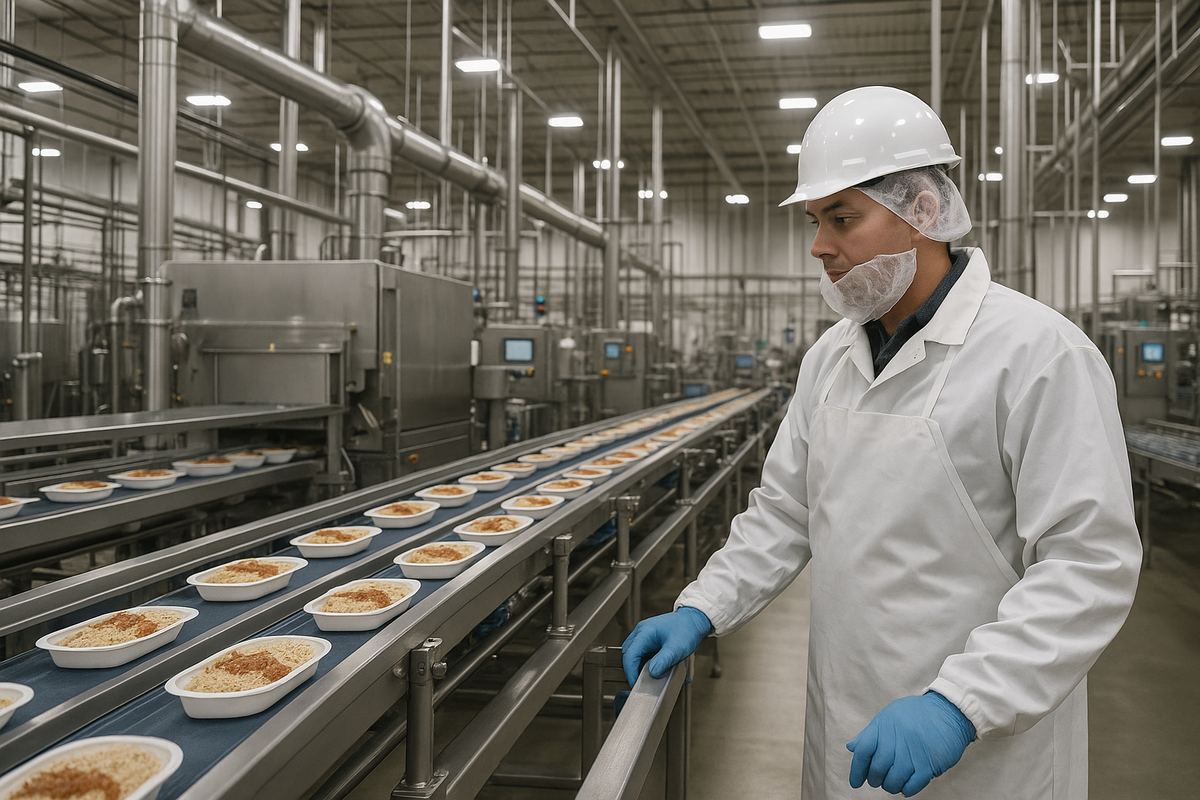
Tyson Prepared Foods operates a real food processing plant in North Richland Hills producing sliced pepperoni and other prepared foods, a long-standing, union-represented facility that has drawn state enterprise zone incentives for job creation, according to Texas Comptroller records.
That established food-manufacturing presence, embedded in the broader Fort Worth-Tarrant County industrial base, gives North Richland Hills a genuine, if lower-profile, production identity distinct from the surrounding retail-heavy suburb.
Documented Tornado Risk for North Richland Hills Manufacturers
North Richland Hills has documented direct tornado impact: a tornado near the city produced at least $3.3 million in property damage, and more recently, a December 2022 storm system caused firefighters to report rotation and resulted in damage to homes and businesses in the area, according to NBC 5 Dallas-Fort Worth.
For a food-processing manufacturer here, that documented, repeated tornado activity is the specific reason property coverage needs wind-damage limits reflecting genuine local risk, not a generic Tarrant County assumption.
A Local Approach to Manufacturing Coverage
Manufacturing Insurance Group evaluates your specific process, equipment, and location before recommending coverage, not a template. Here, that means underwriting against North Richland Hills’ real documented tornado history and its food processing manufacturing base. See our full Texas coverage or explore our complete range of coverage options.
Getting a Quote for Your Manufacturing Operation
Ready to protect your operation? Get expert guidance and a custom quote today.
Manufacturing Insurance FAQs
Does standard commercial property insurance cover tornado damage in North Richland Hills?
Wind and tornado damage are typically covered perils under standard commercial property policies, but limits and deductibles vary widely. Given North Richland Hills’ documented tornado history, including a real event that caused at least $3.3 million in property damage, it’s worth confirming your policy’s wind-damage limits reflect that local risk.
Is workers’ compensation insurance mandatory in Texas?
No. Texas is one of the few states where private employers can opt out of workers’ compensation, becoming non-subscribers. Non-subscriber status carries its own liability exposure, which is worth reviewing with an agent familiar with Texas law.
What insurance does a food processing manufacturer need beyond standard coverage?
Food processing manufacturers typically need equipment breakdown coverage sized to the real replacement cost of processing lines, along with business interruption coverage, since spoiled perishable inventory from an equipment failure or power loss is a real, distinct exposure.
Is equipment breakdown coverage necessary if I already have commercial property insurance?
Yes. Property insurance covers external perils like tornado and storm damage; it excludes internal mechanical or electrical failure. For food processing equipment, that gap is a distinct, necessary policy.
Can one policy cover a manufacturer with facilities in more than one state?
Yes. Manufacturing Insurance Group serves all 50 states, and a multi-location manufacturer can typically consolidate coverage under one program rather than managing separate policies per state.